

Waste heat leaving the stack can today be converted into usable energy by means of economizers.
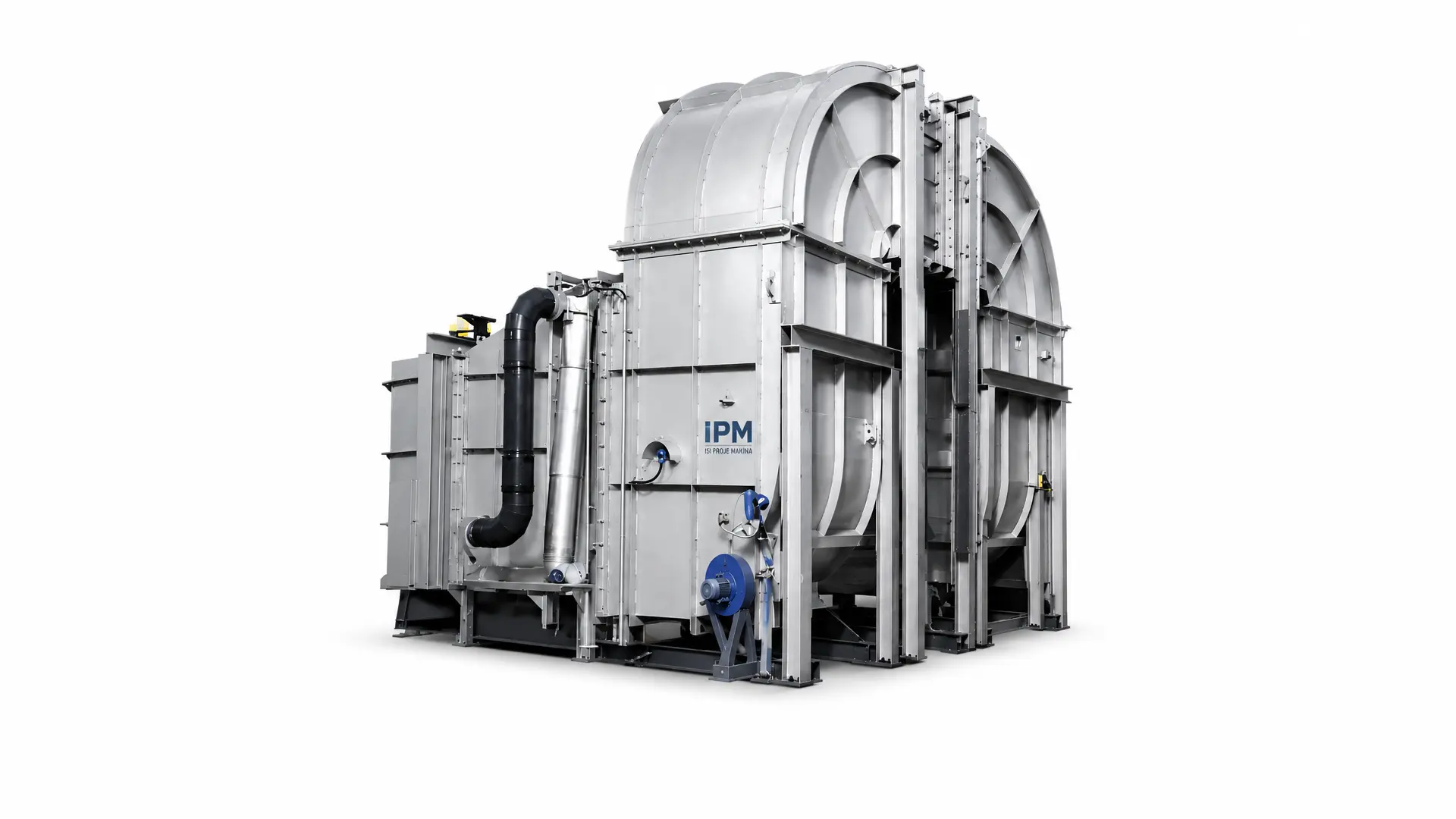
At ISI PROJE we design and manufacture purpose-built economizers and heat exchangers for a wide range of sectors. Today, the waste heat leaving the stack can be converted into usable energy by means of economizers. Because they pay back their investment cost, economizers have become indispensable energy equipment in industry.
By operating principle, economizers are divided into:
• Air-to-Air economizers
• Air-to-Water economizers
• Water-to-Water economizers
By construction type:
• Plain tube
• Oval tube
• Helical finned
• Serpentine tube
• Vertical and horizontal type economizers
Fields of Use:
• Industrial oven stacks
• Steam boiler stacks
• Thermal oil boiler stacks
• Hot water boiler stacks
• Any industrial plant generating waste heat
General advantages of ISI PROJE economizers
• High energy efficiency
• Bespoke design that meets the actual requirement
• High performance
• Long service life and ease of maintenance
• Minimum maintenance requirement
FLUE GAS AIR-TO-AIR ECONOMIZERS
Purpose of Use
They recover the waste heat discharged to the atmosphere through the stack and make it available as heating or drying air in plants operating industrial ovens.
Technical Specifications
• Uniform air circulation thanks to the bespoke design, and uniform heating thanks to the specially engineered tube and jacketing system
• Special drawn steel tube, stainless tube or jacketed plate design
• 500°C maximum flue gas temperature
• 200-500°C flue gas operating temperature
• PLC control system according to operating conditions and on request
• Flue gas can be diverted by means of a damper (actuated flap) adaptation
• Min. heat loss
• Long service life
• Manufacturing capacity range of 20,000 kcal/h - 5,000,000 kcal/h
FLUE GAS AIR-TO-WATER ECONOMIZERS
Purpose of Use
They recover the waste heat discharged to the atmosphere through the stack and make it available for heating water, boiler feed water heating or other dedicated heating requirements.
Technical Specifications


